National Volunteer Week: Celebrating the Heart of our Hospitals

19 June 2026
| This National Volunteer Week, we are proud to celebrate the more than 200 Volunteer Chaplaincy Assistants (VCAs) serving across Aotearoa.
These dedicated volunteers play a vital role in our hospitals. They work hard supporting patients and whānau with compassion and care during the moments that matter most.
Whether sitting quietly with someone who needs a listening ear, offering encouragement during uncertainty, or simply being present, VCAs bring humanity and connection into clinical spaces every day.
Interested in volunteering with Hospital Chaplaincy Aotearoa?
Learn more about what it takes to become a Volunteer Chaplaincy Assistant:
A community of care in Taranaki
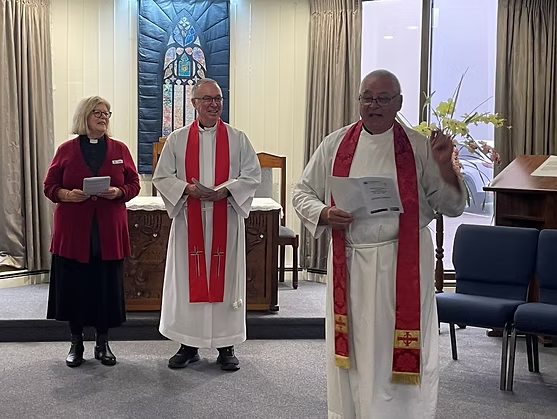
In Taranaki, 19 VCAs support care across Taranaki Base Hospital and Hāwera Hospital.

This remarkable group reflects the diversity of the communities they serve, with backgrounds spanning healthcare, education, business, and public service. What unites them is a shared commitment to serving others with empathy, respect, and kindness.
| Their work is often quiet and unseen, but the impact is profound.
Listening, presence, and compassion
For many VCAs, the power of their role lies in something simple, yet deeply meaningful: listening.
Heather Butler, who has volunteered since 2015, says the most rewarding part of her role is knowing that her visits truly make a difference.
Patients often share that having someone sit and listen has helped them through difficult moments, something she describes as both humbling and grounding. She believes the most important part of the role is being a good listener and meeting people exactly where they are, without judgement.
David Thorpe highlights the importance of empathy and connection, particularly in stressful or emotional situations.
Drawing on his background as a chaplain, he values being able to encourage and support people as they process what they’re going through. One experience that stands out for him is walking alongside a family in the final hours of a loved one’s life — helping them share memories, express what mattered most, and find peace in a deeply difficult moment.
Jane Moore, a VCA of eight years, describes the role as an opportunity to meet people at one of the most vulnerable points in their lives.
She says being able to quickly build trust, pick up on emotional cues, and “brighten someone’s day”, even in small ways, is both a privilege and a responsibility.
A meaningful way to serve

Despite the challenges, VCAs consistently describe their work as deeply worthwhile, both for those they support and for themselves.
Many are involved in other forms of community service, reflecting a strong commitment to caring for others beyond the hospital setting. For some, volunteering as a VCA began as a quiet sense of calling; for others, it grew out of prior experience in care or chaplaincy. What they share is a willingness to give their time, their presence, and their compassion.
Thank you to our volunteers
This National Volunteer Week, we extend our deepest gratitude to every VCA across the country.
| Your generosity, empathy, and dedication make an immeasurable difference to patients, whānau, and hospital staff every day.

You bring comfort in times of distress, connection in moments of isolation, and kindness when it is needed most.
Quite simply, we couldn’t do this work without you.💙